Tarkovsky and Kubrick will always sit near the top of any list of the greatest filmmakers in history. They even personify, in a way, the USA versus USSR duality of the Cold War, though Tarkovsky had a complicated relationship with his own country.
Each superpower had its own cinematic genius, and the two could not have approached the medium more differently. One sculpted time and chased the spiritual. The other engineered every frame and dissected the systems that grind people down.
Stand their films side by side, though, and the rhymes are startling.
That side-by-side is exactly what video essayist Vugar Efendi built. In his 2016 piece Kubrick / Tarkovsky, he runs their films in parallel, pairing Eyes Wide Shut with Ivan’s Childhood and A Clockwork Orange with Stalker, all of it scored to Max Richter’s “On the Nature of Daylight.”
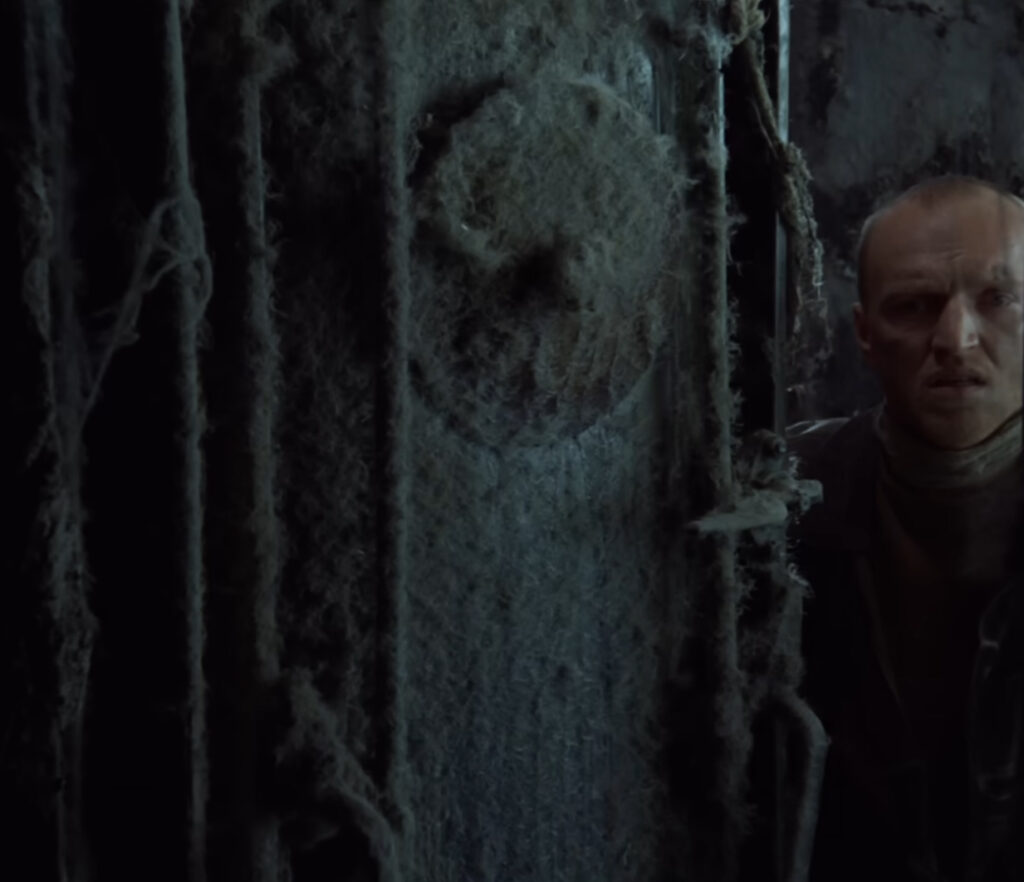
In his own words: “This brief comparison shows their unique cinematic styles, in which, to a certain extent, they share the same philosophical and thematic connotations in their filmography.” Have you taken the time to discover the work of these two masters?
What’s Inside
What’s Inside
Andrei Tarkovsky
Andrei Tarkovsky is one of the greatest figures in Soviet cinema. Beyond the seven feature films he made during his lifetime, he is also the author of Sculpting in Time, an essential book for anyone who loves and studies cinema. His work carries great depth alongside a certain poetry. These films are not easy to sit with, but they appear in every serious study of film history.
To understand Tarkovsky you have to start with that book’s title, because it was also his theory of film. For him, the raw material of cinema was not the image or the cut but time itself, and the director’s job was to carve blocks of it. That is why his takes run so long: he wanted you to feel the pressure of time gathering inside a single shot, the way it does in life. It put him at odds with the Soviet montage tradition of Eisenstein. Where montage builds meaning by colliding shots, Tarkovsky believed truth could only accumulate inside an unbroken one.
His narratives follow a poetic logic rather than cause and effect, moving by memory, dream, and association. And here is the part most viewers get backwards: Tarkovsky insisted his films were not coded with symbols to decode. The dripping water, the fire, the wet earth, the wind moving through grass, those elements run through everything he made, but he meant them as direct experience, not as a puzzle to solve. His sound works the same way, non-naturalistic and often electronic in the hands of composer Eduard Artemyev, treating silence as deliberately as any score.
Lewis Bond did a remarkable job of research and editing on Tarkovsky’s body of work, resulting in the essay film Andrei Tarkovsky: Poetic Harmony for his channel, then called Channel Criswell. The original idea for this article was to discuss each of Tarkovsky’s films individually, but it is almost impossible to define them through short synopses and scene excerpts. Bond’s work helps explore the Russian director’s universe far better than a summary could.
The critical respect Tarkovsky received even during his lifetime is reflected in the awards he accumulated over the years. At the Cannes Film Festival alone, he won the FIPRESCI Prize four times, the Ecumenical Jury Prize three times, and the Grand Prix Spécial du Jury twice. He was also nominated for the Palme d’Or twice and received awards at BAFTA and the Venice Film Festival.
His films carry multiple layers of narrative, compositional, and editorial inspiration. Well worth your time: Ivan’s Childhood, Andrei Rublev, Solaris, The Mirror, Stalker, Nostalghia, and The Sacrifice.
Stanley Kubrick
Stanley Kubrick is a far more widely known name among cinephiles around the world. The American director brought with him, beyond enormous talent as a writer and director, a deep knowledge of classical music and photography. Lewis Bond also made a fantastic video exploring who Kubrick was, Stanley Kubrick: The Cinematic Experience.
Kubrick approached the same medium from the opposite end. Where Tarkovsky trusted time to reveal truth, Kubrick engineered it. His most recognizable signature is one-point perspective: corridors, war rooms, and space stations composed in rigid symmetry around a single vanishing point, the frame as a controlled system. Out of that order he would pull menace, most famously through the Kubrick stare, the low-angle shot of a character with head bowed and eyes raised. It is the look of someone crossing into violence or madness, and Alex in A Clockwork Orange, Jack in The Shining, and the unblinking eye of HAL all share it.
Then there is his use of music. Kubrick rarely commissioned a traditional score. He set existing classical pieces, from Ligeti and Strauss to Beethoven and Handel, against his images as ironic counterpoint, beauty playing over cruelty. It is part of a colder project that runs through his whole filmography: the individual ground down by systems, whether the military, technology, or social conditioning. He keeps the camera at a clinical distance and lets you watch.
Known for his extreme perfectionism, Kubrick became a reference point for many scenes that entered cinema history precisely through their execution. Among them is his early use of a then-new technology, the Steadicam, which he deployed to reinforce the narrative and gave life to some of the most iconic shots ever filmed. He paired that fluid motion with the slow reverse zoom, pulling the camera back to reveal scale, coldness, and isolation.
In Barry Lyndon, he went after Mitchell BNC cameras and a Zeiss lens originally developed for NASA satellite photography, with an aperture of f/0.7. Kubrick needed it to shoot scenes lit entirely by natural light and candles. The goal was not a technical stunt for its own sake. He wanted the film to look like 18th-century paintings brought to life, and he got it. Barry Lyndon captures the visual world of its era so completely that many shots could pass for canvases. Not by accident, the film won the Oscar for Best Cinematography. For more on this obsessive method, Open Culture has a good overview of how Kubrick made his masterpieces.
The Film Theory That Connects Tarkovsky and Kubrick
On paper, Tarkovsky and Kubrick are opposites. One is warm, searching, and spiritual; the other cold, precise, and ironic. One lets a shot breathe until time itself becomes the subject; the other locks the frame into geometry and control. Tarkovsky films faith and memory. Kubrick films systems and the people they crush.
And yet Vugar Efendi’s side-by-side video essay works because the rhymes are real. Both slowed cinema down when the industry was speeding up. Both treated the single frame as a painting worth holding. Both used music and silence with surgical intent. Both refused to spell everything out, leaving deliberate room for the viewer to finish the meaning. That refusal to condescend, more than any single visual trick, is the film theory that connects Tarkovsky and Kubrick. They trusted the audience to do some of the work.
Among the Greatest
These two giants of cinema would fill volumes of analysis and deconstruction. Each individual film can sustain many readings on its own, given the layers of perception, introspection, and, in some cases, openness to the viewer’s own interpretation that each of them carries.
Mandatory figures on any list of all-time greats, knowing their work is an essential step for anyone who wants to go deeper into film theory. It is impossible to call either one lesser than the other. All we can do is draw inspiration from the remarkable body of work both left behind.
Which of the two pulls you in more, Tarkovsky’s patience or Kubrick’s precision?
Tell me in the comments, and name the film you would start someone on.